



Fiberglass Deck Board vs. the Camémat Alternative
If you’re looking for a durable, low-maintenance option for fixing up your deck or terrace, you may have heard about fiberglass deck board. However, this material presents several disadvantages you should be aware of before investing your hard-earned money.
- Fiberglass is a material that easily absorbs heat. On hot days, besides expanding, fiberglass can also be very uncomfortable on bare feet, especially if it’s a dark color.
- During the winter or when it rains, fiberglass deck boards are becoming extremely slippery. And if metallic objects sit on top of them for extended periods, fiberglass can become stained with rust, which is extremely difficult to remove.
- Since this material has a veneer, it’s prone to mold and mildew if water seeps into it.
- If a fiberglass deck board cracks, it can’t be repaired.
- Fiberglass is heavier than alternative synthetic materials. As a result, this material can’t be used on certain types of structures.
- Unfortunately, fiberglass isn’t easy to repair or restore, so damaged fiberglass deck board often ends up in landfills.
- Don’t absorb a lot of heat, regardless of their color
- Have a non-slip surface that exceeds the industry standards for safety
- Are high-density, allowing them withstand our harsh climate
- Can be installed on a wide variety of surfaces, unlike fiberglass
- Are relatively easy to repair or replace
- Stand up to extreme weather and ultraviolet rays
- Don’t absorb moisture
Other tips and advice

Can an Aluminum Railing Really Withstand Our Winters?
When choosing an outdoor railing, one question often comes up: can aluminum really withstand winter conditions year after year? Between snow, moisture, freeze-thaw cycles, and temperature fluctuations, outdoor installations are put to the test throughout the seasons. Choosing the right material therefore plays an important role in the railing’s long-term performance. Aluminum stands out for […]

How long does a composite deck last?
On average, a high-quality composite deck can last 25 to 30 years or even longer, depending on the materials used, the quality of the installation, and the maintenance performed over time. However, not all composite products offer the same level of performance. Manufacturing quality, board composition, and the technologies used directly influence their strength and […]
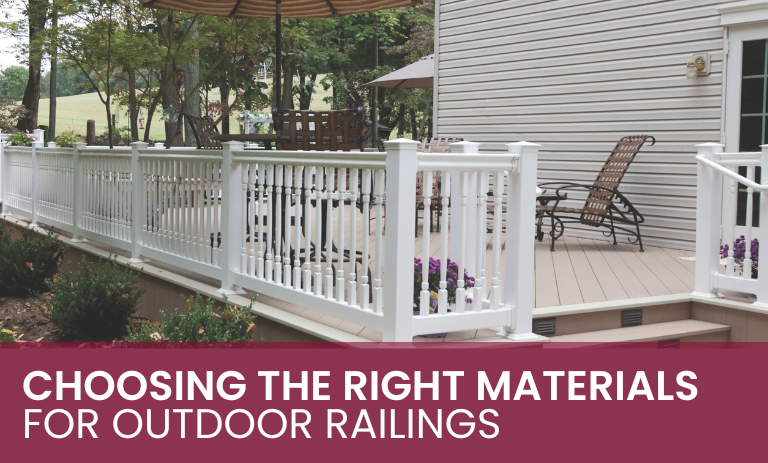
Which outdoor railing should you choose for your home?
When planning a balcony, deck, or porch, the railing is often one of the last elements homeowners consider. Yet it plays a vital role in both safety and the overall appearance of your property. A well-chosen railing can modernize your home’s exterior, enhance your outdoor living space, and improve everyday comfort. On the other hand, […]